

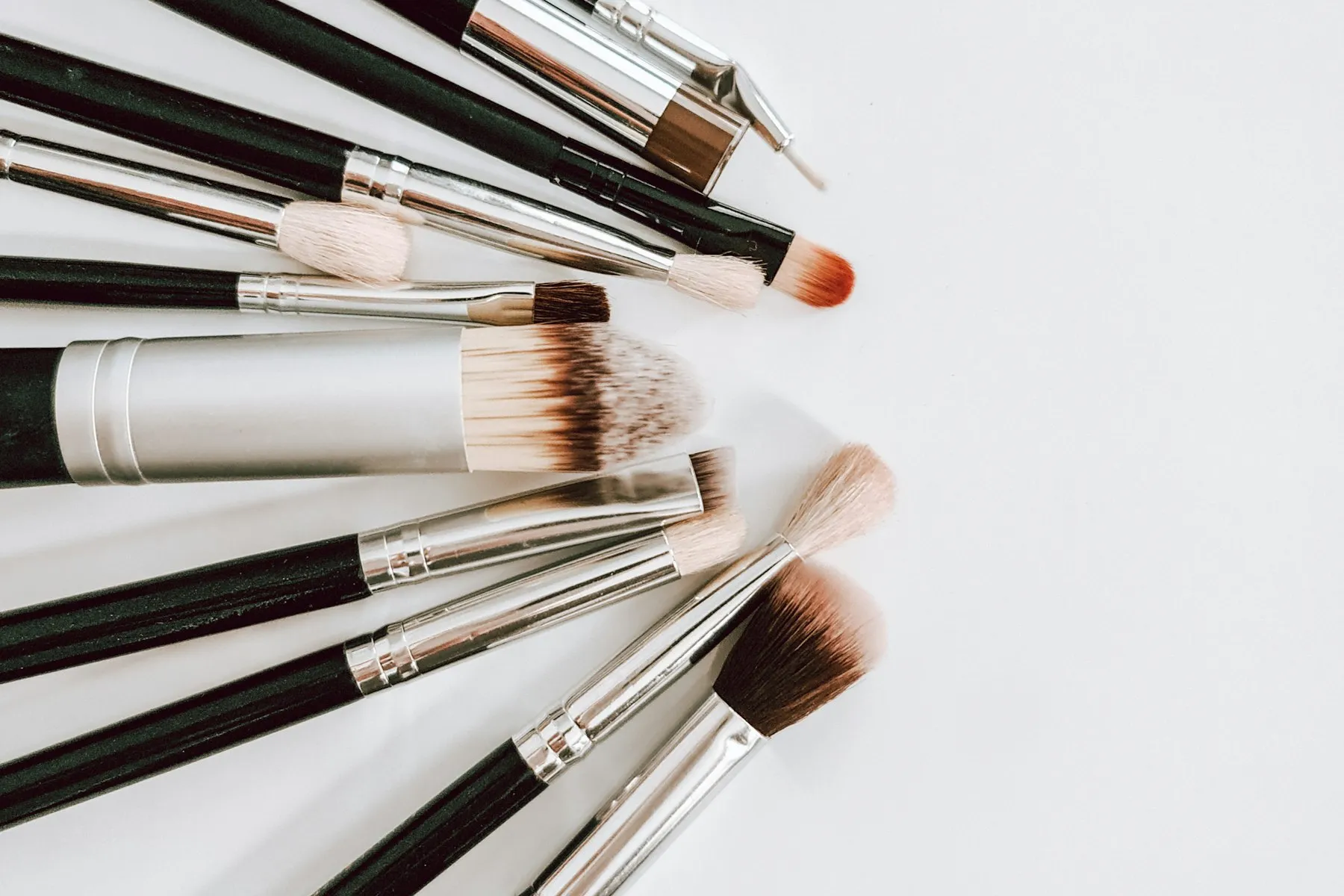
Brush sets are sold in twelves because twelve looks like value in a box. Nobody’s routine has twelve steps, and the four brushes in any set that get used are doing the work of the other eight badly labelled ones.
Two brushes will do almost everything, and choosing them well matters far more than owning more.
The two
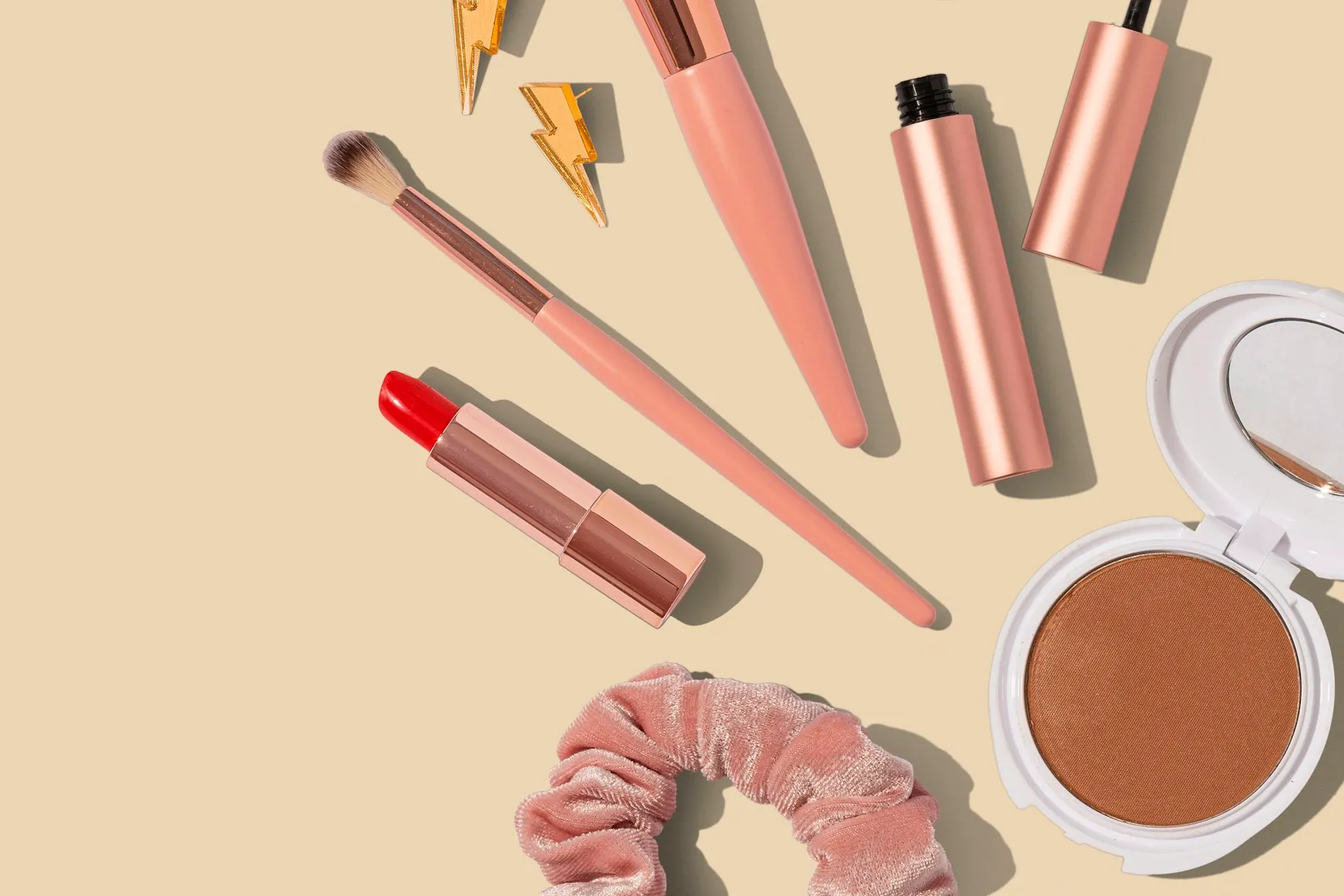
A small dense flat brush. Synthetic, flat-topped or very slightly domed, about the width of your ring fingernail. It places product — concealer, cream blush, cream bronzer, a cream eyeshadow base — and it places it exactly where you put it. Density is the whole point: a dense brush moves product onto skin, a sparse one moves it around on top of skin.
A tapered fluffy brush. Natural or synthetic, loosely packed, coming to a soft point. It diffuses. Everything the flat brush placed too firmly, this softens; every hard edge it removes. It is also, for most people, the only eyeshadow brush they need.
Between them: base, concealer, blush, bronzer, contour, a crease, a blended lid. The remaining brushes in a set are variations on the fluffy one in three sizes and a fan brush nobody has ever used twice.
What determines whether a brush is good
Not the price, and not whether the bristles are natural.
Density, first. A brush that has been under-filled to save cost will feel pleasant and deposit almost nothing, which is why cheap sets so often produce the conclusion that a product has poor pigmentation.
Then the ferrule — the metal collar. If it is glued rather than crimped it will loosen, and the brush will start shedding after a dozen washes. You can feel the difference by twisting the head gently; there should be no movement at all.
Then the cut. Machine-cut bristles have blunt ends and scratch; the good ones are assembled from bristles cut to length at the base so the natural tips stay intact. On synthetics, look for tapered filaments rather than uniform ones — you can see it against the light.
Natural versus synthetic, settled
Synthetic for anything wet or creamy. Natural hair is porous, absorbs product, and is much harder to clean properly, which is why a natural brush used with foundation goes stiff.
Natural, or a high-quality synthetic that mimics it, for loose powder — the cuticle structure picks up and releases powder more evenly. This is the only category where the distinction still genuinely matters, and modern synthetics have narrowed the gap to the point where it is a preference rather than a rule.
Washing, briefly
Once a week for anything used with cream, which is the only maintenance instruction that changes performance. A brush loaded with old foundation deposits old foundation.
Shampoo, lukewarm water, bristles pointing down so water never reaches the glue in the ferrule, then reshape and dry flat with the head off the edge of a surface. Standing a wet brush upright is how you dissolve the adhesive and end up with a shedding brush and a mystery.
The exception
If you use liquid liner, buy the liner brush. It is the one shape nothing else substitutes for, and it is also the one brush where twenty pounds buys a genuinely different experience from five.
Everything else, two brushes, well chosen, washed on Sundays.