
The industry line is that cream blush came back because of a preference for skin-like finishes, and there is something in that. But the honest explanation is duller and more convincing: cream blush is much harder to get badly wrong, and most people applying blush are doing it in four minutes, in poor light, without a brush.
Powder is unforgiving in a specific way. It sits on top of whatever is underneath, so it reveals texture rather than softening it, and it has almost no working time — once it is down, moving it means moving the foundation under it too. Get the placement wrong and the only real fix is to start the base again.
Cream does the opposite. It has thirty seconds or so before it sets, during which it can be pushed, thinned and blended into a base rather than laid on top of one. Too much comes off with a clean finger. Wrong place, and the same finger drags it somewhere better. The forgiveness is the product.
Where it actually goes
The received advice — apples of the cheeks, smile first — produces a round, low placement that drags the face down on most people and reads as blusher rather than as colour. Two more useful reference points.
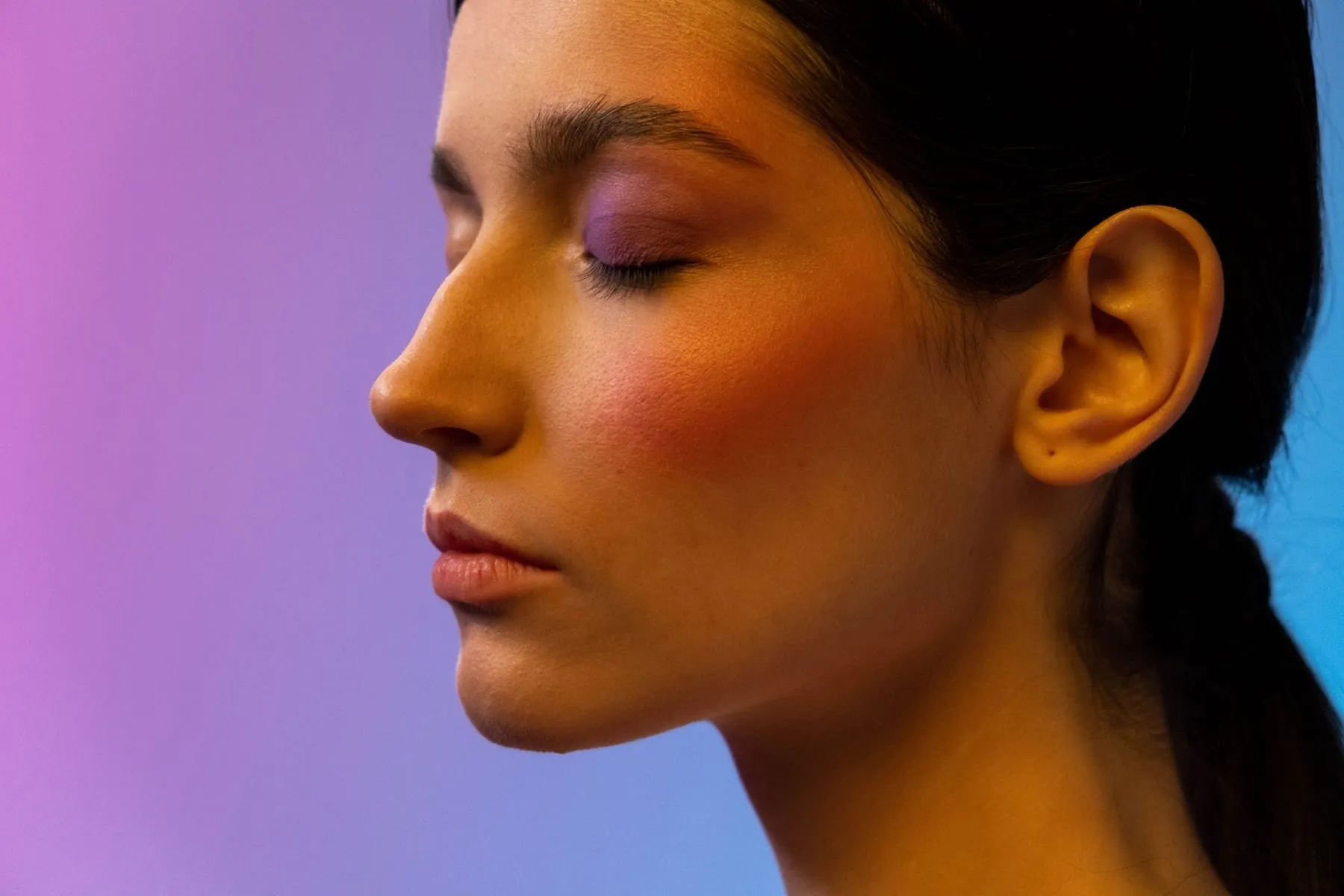
Find the outer corner of your iris and drop straight down to the top of the cheekbone. That is the highest point of the flush, and everything else is a fade away from it, toward the ear rather than toward the nose.
Then stop well before the nose. Colour carried too far in is what turns a flush into a stripe.
Formula matters more than shade
A cream blush is pigment suspended in something, and that something determines nearly everything about how it behaves.
Silicone-forward formulas glide and set fast. They suit oily skin and punish hesitation. Emollient, balm-type formulas stay movable for much longer and sit beautifully on dry skin, but they will travel on anyone whose base is already slipping by two in the afternoon. Water-gel tints grab on contact — the least forgiving of the three despite being cream in name, and the ones people complain about most.
If your blush has disappeared by lunchtime, the shade is not the problem. The base underneath almost certainly is.
What it does not fix
Cream blush will not survive a heavily powdered face. Applied over set powder it goes patchy and slightly gritty, because the powder breaks the film before it can level. The order is base, cream, then powder only where you need it — and mostly you do not need it where the blush is.
It will also not do a bronzer’s job. The temptation, once you have found a shade that flatters, is to use it for warmth across the whole face. That gives you a flat uniform pink which photographs as sunburn. Blush is a point of interest. It is meant to be somewhere, not everywhere.
The one thing worth spending on
Not the blush. Every price bracket has a good cream formula now, and the cheaper ones are frequently better, because they lean on textures that have been proven for a decade rather than on novel ones that photograph well.
Spend instead on a small dense brush for the days your fingers run warm — heat thins a cream and makes it grab — and on whatever goes underneath, because a cream blush is only ever as good as the surface it lands on.