
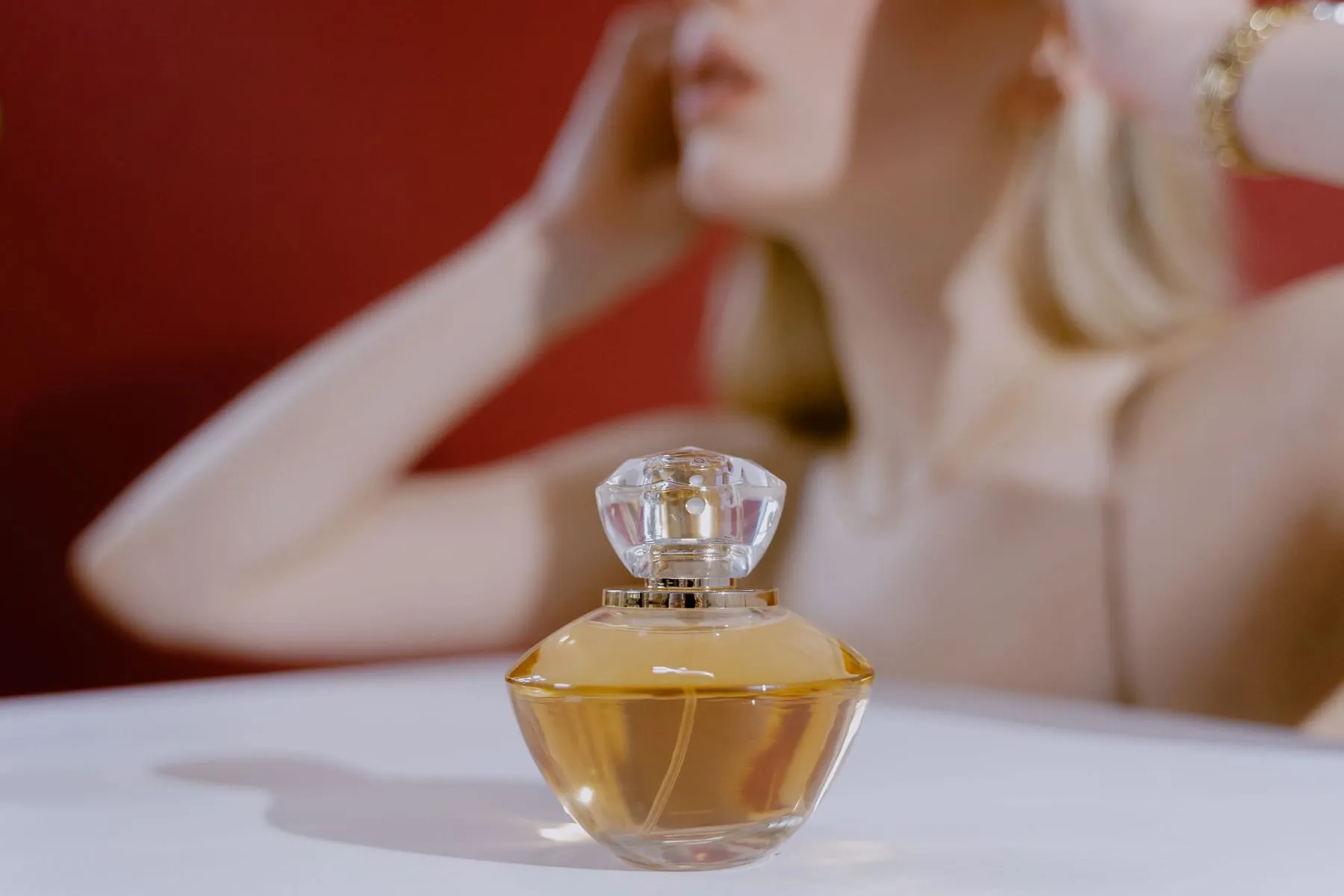
The most common complaint about an expensive fragrance is that it had vanished by lunchtime. The most common response from a sales assistant is that it must be your skin. Both parties are half right, and the half nobody mentions is the half that would have changed the purchase.
Longevity on skin is mostly a question of how heavy the molecules are. Volatility scales roughly with molecular weight: citrus and light aldehydes are small and flash off inside an hour; floral and green materials sit in the middle; and the base — woods, musks, resins, vanillin, the various ambers — is heavy enough to still be releasing at bedtime. A composition built almost entirely from the top of that range will be gone by eleven whatever it cost. One built on synthetic musks will still be faintly present tomorrow even if it cost fifteen pounds.
Concentration is a range, not a grade
The familiar ladder — eau de cologne, eau de toilette, eau de parfum, extrait — describes the proportion of perfume oil in the alcohol base. It is not meaningfully regulated. An eau de toilette might be 8 per cent or it might be 14. An eau de parfum might be 12 or 25. Two bottles from the same house, carrying the same name, can differ by a factor of two.
More to the point, the higher concentration is very often not the same composition turned up. It is a different formula with more base material in it, which is why the extrait of something you loved can smell wrong rather than merely stronger.
What your skin actually contributes
Skin does matter, though less mystically than the counter suggests. Two variables do most of the work.
The first is surface lipid. Oilier skin holds aromatic molecules longer, because most of them are lipophilic and will dissolve into sebum rather than evaporate off a dry surface. That is why the same scent lasts noticeably longer on some people, and why applying to well-moisturised skin genuinely extends wear: you have given the molecules somewhere to sit.
The second is temperature. Warmth drives evaporation, which is why a fragrance projects hardest in the first ten minutes and why pulse points work at all — they are simply the warm bits. They also burn through the top notes faster, which is the trade you are making.
How to buy for longevity honestly
Ignore the marketing copy and read the composition. If the description is built around bergamot, neroli, green notes and freshness, accept that you are buying two to three hours and enjoy them properly. If it names sandalwood, benzoin, tonka, patchouli, oakmoss or anything labdanum-adjacent, expect it still to be there at dinner.
Test on skin, never on card, and give it four hours before you decide. The single most expensive mistake in fragrance is buying at the twenty-minute mark, when you are still smelling the part of the composition designed to sell it rather than the part you will actually wear.
And if an assistant tells you the reason it faded is that your skin eats fragrance: what they mean is that it is a light composition, and they would rather sell you the extrait than say so.