



There is no correct number of washes per week, and the confidence with which the internet supplies one is inversely proportional to the evidence behind it.
Sebum production is set by hormones, genetics and to some extent by climate. It is not meaningfully trainable. The claim that washing less “retrains” your scalp to produce less oil has been repeated for decades and has no controlled evidence supporting it; what happens during a wash-less experiment is that people adapt to how their hair looks, and their sebaceous glands carry on exactly as before.
That does not make washing less a bad idea. It makes the stated reason for it wrong, which matters, because the wrong reason leads to the wrong advice for a lot of people.
What actually determines your frequency
How much sebum you produce. Fine, straight hair shows oil fastest, because sebum wicks down a smooth shaft easily and there is less surface area to distribute across. Coarse and coiled hair shows it slowest and often needs the opposite intervention — oil added rather than removed.
What you put on it. A dry shampoo habit, a heavy leave-in, or a silicone-based styling routine all build up, and build-up needs a proper clarifying wash regardless of how oily your scalp is. This is the single most common reason someone’s “clean” hair feels coated.
What your scalp is doing. Flaking, itching and a tight feeling are scalp conditions, not hair conditions, and they respond to how you wash — the surfactant, the water temperature, whether you rinse properly — far more than to how often.
The technique that matters more than the frequency
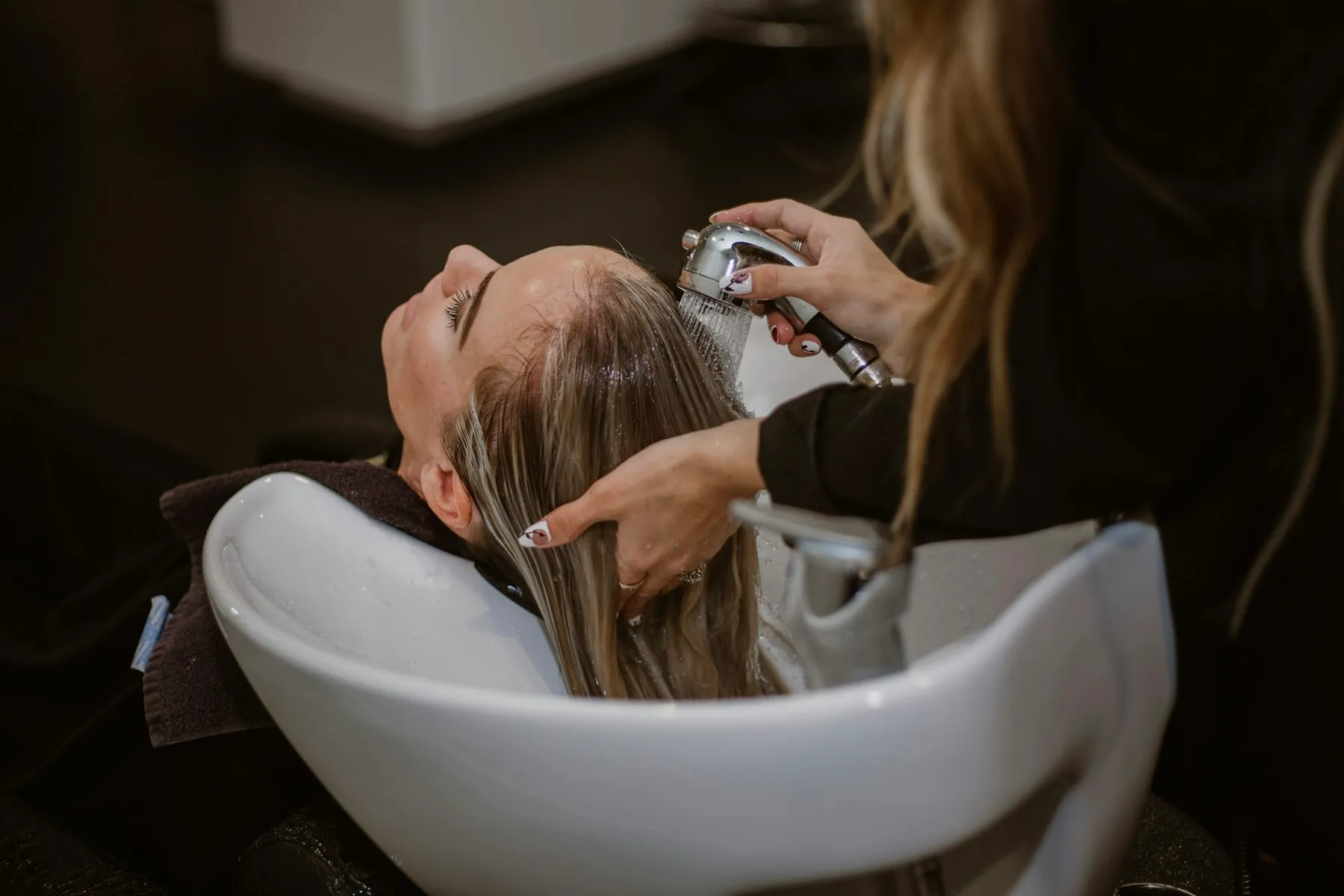
Shampoo the scalp, not the lengths. The lengths are cleaned adequately by what runs down them during rinsing, and scrubbing them roughens the cuticle for no benefit.
Use your fingertips, not your nails, and take sixty seconds. Most people shampoo for about fifteen, which does not give a surfactant time to do very much; a longer massage at the scalp does more than a second wash.
Rinse for longer than feels necessary. Residual shampoo is a common cause of the dull, slightly heavy feeling that gets blamed on the product.
Condition the lengths, not the scalp — unless your scalp is dry, in which case ignore that and condition it.
The one honest rule
Wash when your hair looks or feels like it needs it.
That sounds like a non-answer and it is the only defensible one. Scalps vary by an order of magnitude in sebum output. A person washing daily because otherwise their hair is flat by lunchtime is not damaging anything — daily shampooing with a gentle surfactant has no demonstrated ill effect on hair or scalp health. A person washing twice a week because that is when it needs it is also fine.
The people having a hard time are almost always the ones following a rule they read, against the evidence of what they can see in the mirror.
Where the advice is worth following
If your hair is chemically treated, coarse, or coiled, washing less genuinely helps — not because of sebum training but because every wash swells and contracts the shaft, and repeated swelling is a real source of mechanical fatigue in hair that is already fragile.
That is the actual argument for washing less, and it is a good one. It just applies to a much narrower set of people than the internet suggests.