
The great frustration of buying lipstick is that the shade you saw on someone else is not the shade you get, and the explanation is not mysterious. Lips are not a neutral canvas. They have their own colour, they are unevenly pigmented, and they are translucent to a degree that varies from person to person.
Any lipstick that is not fully opaque is a filter over that. What you see is the mix.
What the bullet is made of
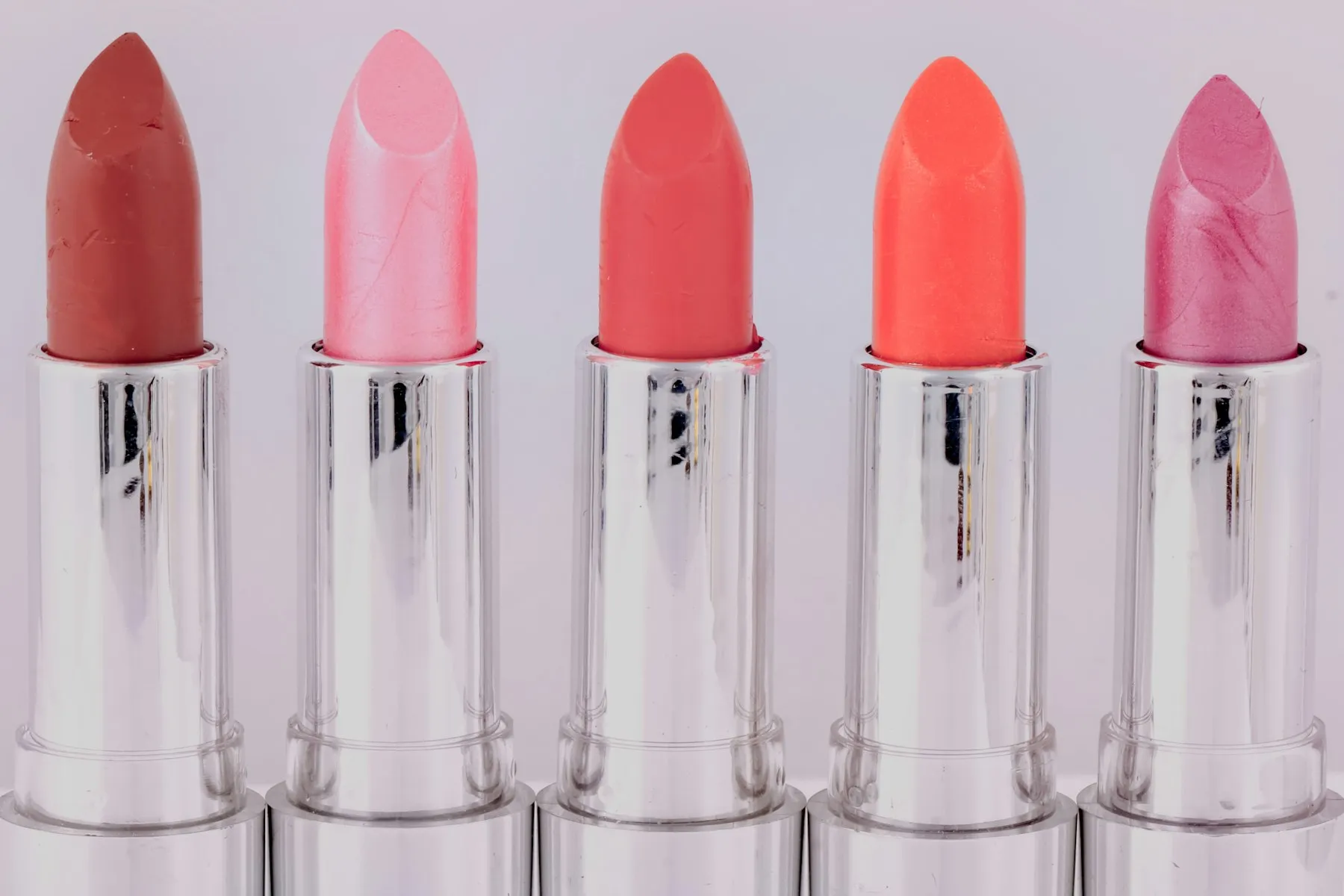
Red in cosmetics comes from a handful of permitted colourants, and each behaves differently.
Blue-based reds are usually built on carmine or one of the D&C reds with a violet cast. They read cool, they make teeth look whiter by contrast, and they hold their character over most lip tones because the blue is strong enough to dominate.
Orange-based reds rely on iron oxides and yellow lakes. They are the ones that shift most on the lip: on a naturally cool, blue-toned lip an orange-red will go muddy or brick, which is why the same tube can look vivid on one person and dusty on another.
True reds sit between, and they are the least predictable of the three, because there is nothing in them strong enough to override what is underneath.
Opacity is the variable nobody checks
A full-coverage matte will look close to the bullet on almost anybody, because it is essentially paint. A satin or a cream is partially translucent, and a sheer or a tint is mostly translucent — at which point the outcome is fifty per cent your own lip.
This is the whole explanation for the shade that looked incredible on your friend. If she has cooler lips than you and the formula is sheer, you are both wearing a different colour.
If you want a specific red to be that red on you, buy the opaque version of it. If you want it to look like it belongs to your face, buy the sheer one and accept it will land somewhere personal.
The test that works in a shop
Not on the back of the hand, which is a completely different colour and has no translucency at all.
Swatch on the pad of a fingertip, which is closer in tone and thickness to a lip than any other convenient bit of skin, and hold it beside your mouth. It will not be exact and it will be far closer than the wrist.
Better still, if the shop allows it: wear it, and then look at it in daylight with your teeth showing. Two things reveal a wrong undertone instantly — the colour of your teeth against it, and the way it meets the skin at the lip line. A red with the wrong temperature makes teeth look yellow and creates a visible grey edge where the lip stops.
The one that suits nearly everyone
If there is a universal red it is a mid-depth blue-red at full opacity. Blue-based, so it does not fight anybody’s undertone; opaque, so it does not become a lottery; mid-depth, so it neither disappears on deep skin nor overwhelms fair.
It is also, not coincidentally, the shade almost every brand has been selling as its signature for eighty years. That is not a marketing accident. It is the one point in the colour space where the maths works out for the largest number of faces.