




Most anti-ageing claims are inferences. An ingredient does something interesting to fibroblasts in a dish, a small trial finds a modest change in a measure of roughness, and marketing does the rest. That is not fraud, but it is a long way from proof.
Sunscreen is the exception, and it is worth being precise about why. In a randomised controlled trial in Nadi, Queensland, adults assigned to daily broad-spectrum sunscreen showed no detectable increase in skin ageing over four and a half years, while the discretionary-use group did. Same climate, same population, one variable. That is a study design the rest of the category cannot approach, because you cannot randomise people to a retinoid for five years and keep them blinded.
So: photoprotection is the intervention with the best evidence in the whole of cosmetic dermatology, and everything else in your routine is optional relative to it.
What the number on the bottle means
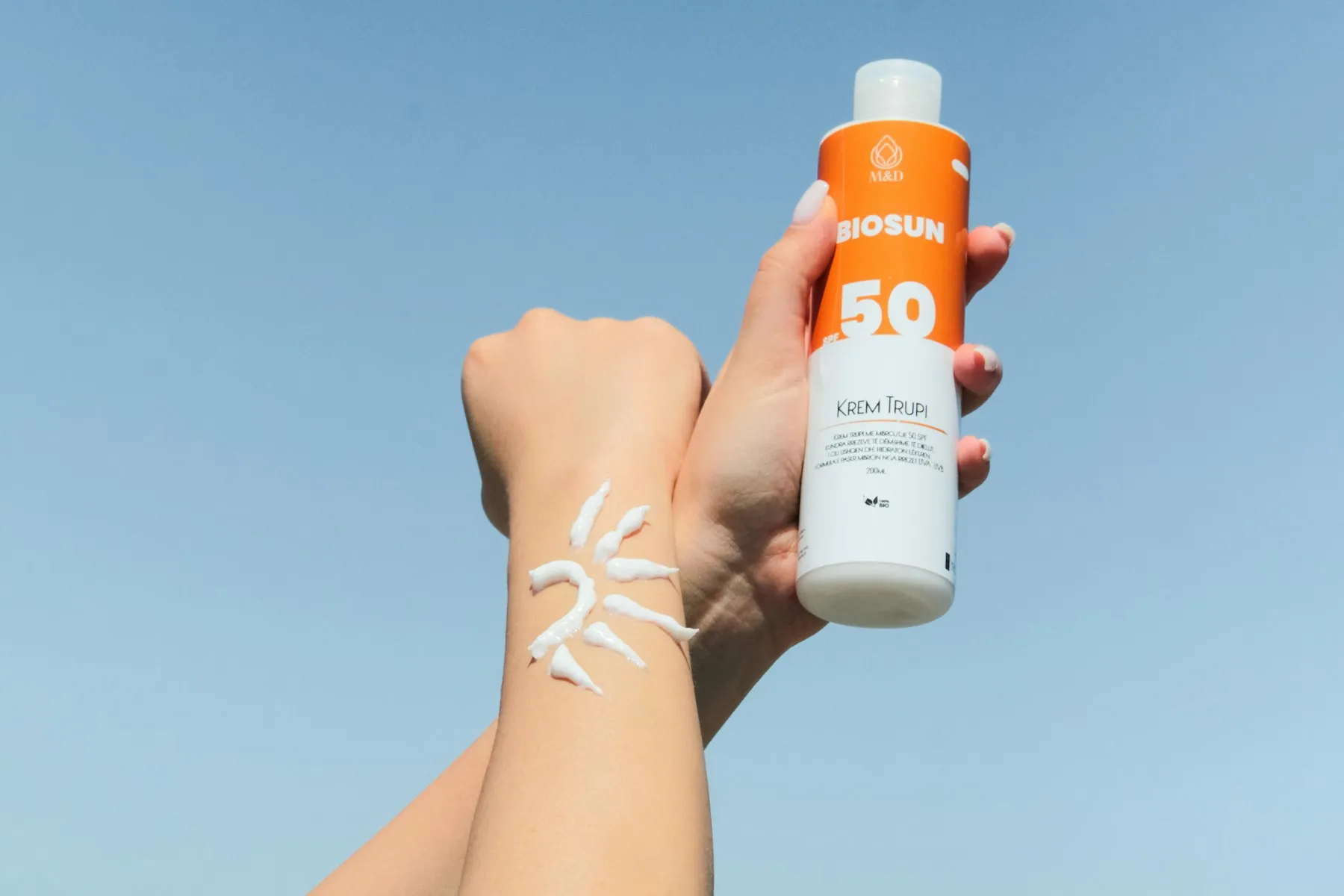
SPF measures protection against the erythemal dose — essentially UVB, the wavelengths that burn. It is a ratio, not a percentage, and it is measured at 2 mg per square centimetre, which is roughly a third of a teaspoon for a face and considerably more than most people apply.
The practical consequence of under-application is not proportional. Protection falls off faster than the volume does, so a labelled SPF 50 applied at a typical real-world thickness is delivering something in the teens. This is the single most important fact about sunscreen and the one least often printed on the box.
UVA protection is a separate measurement and a separate problem. It is UVA that drives most of the dermal change people mean by photoageing, and it is not what the SPF number describes. Look for a broad-spectrum designation, the European UVA-in-a-circle mark, or a PA rating — and treat a high SPF with no UVA claim as an incomplete product.
Chemical, mineral, and the argument that will not die
Both work. Organic filters absorb radiation and dissipate it as heat; mineral filters, essentially zinc oxide and titanium dioxide, mostly scatter and absorb it too. Modern organic filters available outside the United States — the various Tinosorb and Uvinul families — are broader and more photostable than anything in the mineral category, and they do not leave a cast.
Zinc oxide is genuinely useful for reactive skin and for anyone who does not want a filter absorbed at all. It also sits on the surface, which means it comes off on fabric, on hands, and on a warm afternoon.
The correct answer is the one you will apply generously every morning without thinking about it. A perfect formula used sparingly loses to an adequate one used properly, and it loses badly.
The habit, not the product
Reapplication is where every routine fails. Two hours is the guidance; nobody does it over makeup, and the powders and mists sold for the purpose have never been tested at anything like the density their labels assume.
The more honest advice is unfashionable: if you are indoors behind glass all day, one thorough morning application is defensible. If you are outside, wear a hat. Shade and fabric are the two photoprotective technologies that have never needed a study, and they do not wash off.