
The physics here are not complicated and they are not in dispute. Water applied to the skin surface evaporates. Evaporation is endothermic and it takes with it not only the water you applied but some of what was already in the stratum corneum. Applied repeatedly without an occlusive over the top, misting leaves skin measurably drier than it started.
Every dermatologist says this. Every brand selling a hydrating mist ignores it. And yet the category keeps growing, which suggests people are getting something from it — so it is worth asking what.
What a mist can genuinely do
Deliver a humectant, if it contains one and you seal it. A mist with glycerin, panthenol or a low-molecular-weight hyaluronic acid, applied and then covered with a moisturiser within thirty seconds, is a functional hydrating step. The mechanism is not the water; it is the humectant left behind and the occlusive over it. Without the second half, the humectant sits on a drying surface and can pull water out of the skin rather than into it.
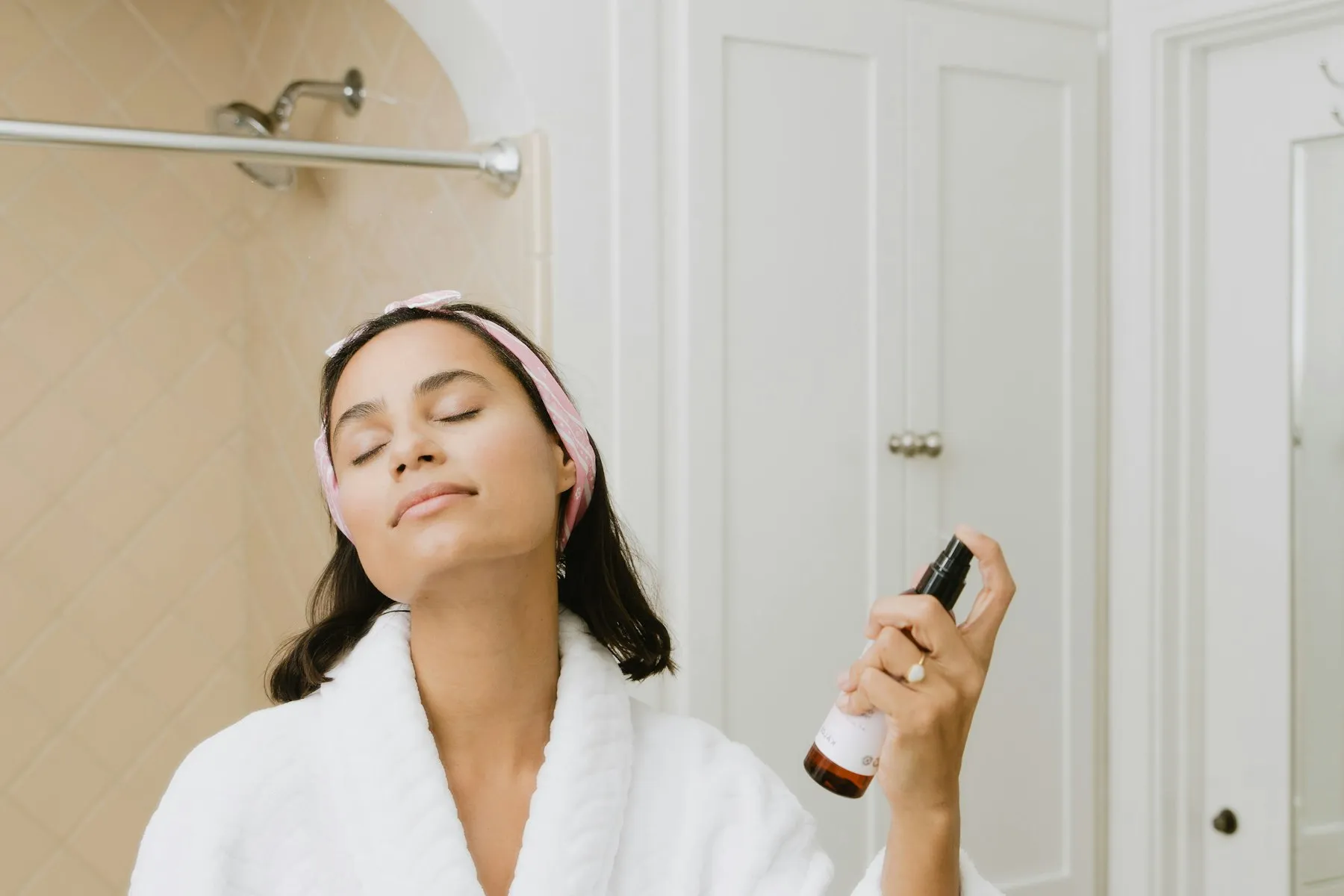
Reduce skin temperature. A cool mist genuinely calms flushing, and for anyone with heat-triggered rosacea that is not a trivial benefit. It is thermal, not hydrating, and it works.
Reset powder. This is the one makeup artists have always known. A fine mist over a powdered base melts the powder slightly into the layers beneath and removes the flat, dusty quality of a heavily set face. It is a finishing technique and it is genuinely transformative on camera.
Make you stop. Not nothing. A mist is thirty seconds of pause with your eyes closed, and a great deal of what people describe as calming skincare is that.
What it cannot do
Hydrate on its own, in the sense of raising water content in the stratum corneum for any useful length of time. The film is gone in ninety seconds.
Set makeup, unless it contains a film former — most do not, and the ones that do say so.
Deliver actives meaningfully. The dwell time is too short and the dose is too small. A mist containing niacinamide is a mist, with a marketing claim attached.
How to use one properly
If it contains humectants: mist, then moisturise immediately, before it dries. That is the whole instruction and it converts a useless step into a useful one.
If it is thermal water or a plain botanical water: use it for temperature, not for hydration, and do not expect it to replace anything.
If you are using it over makeup: hold it further away than feels right — thirty centimetres, not fifteen — and go across the face rather than at it. Large droplets land as spots and disturb the base; a fine even fall is what melts powder.
The one worth owning
An unscented thermal water in a can, kept in the fridge, for hot days and for skin that flushes. It costs very little, the claims on it are modest, and it does exactly what it says.
Everything sold as a hydrating mist at three times the price is either that with glycerin in it, or that with a fragrance in it. The first is worth having if you seal it. The second is a room spray you are aiming at your face.