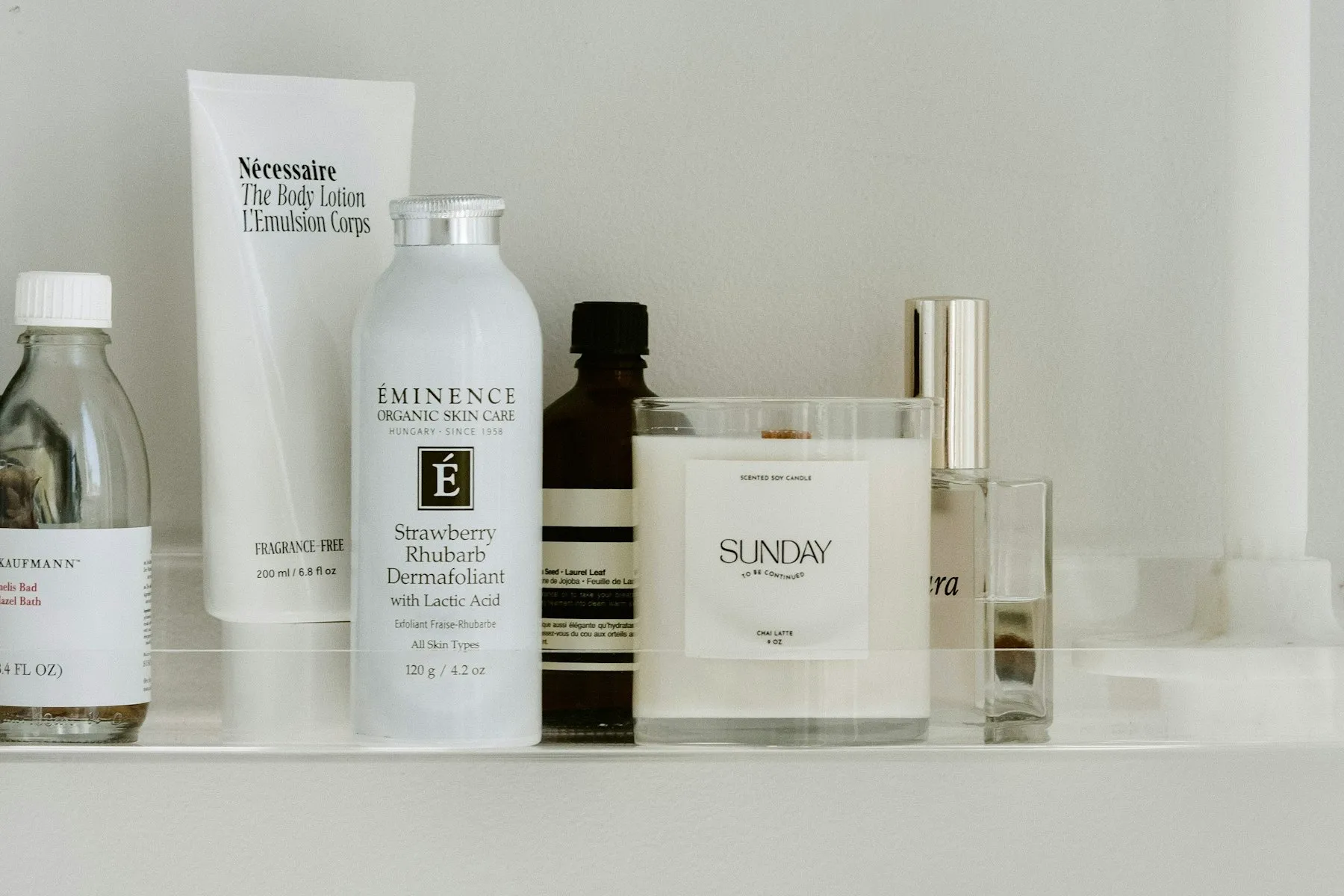




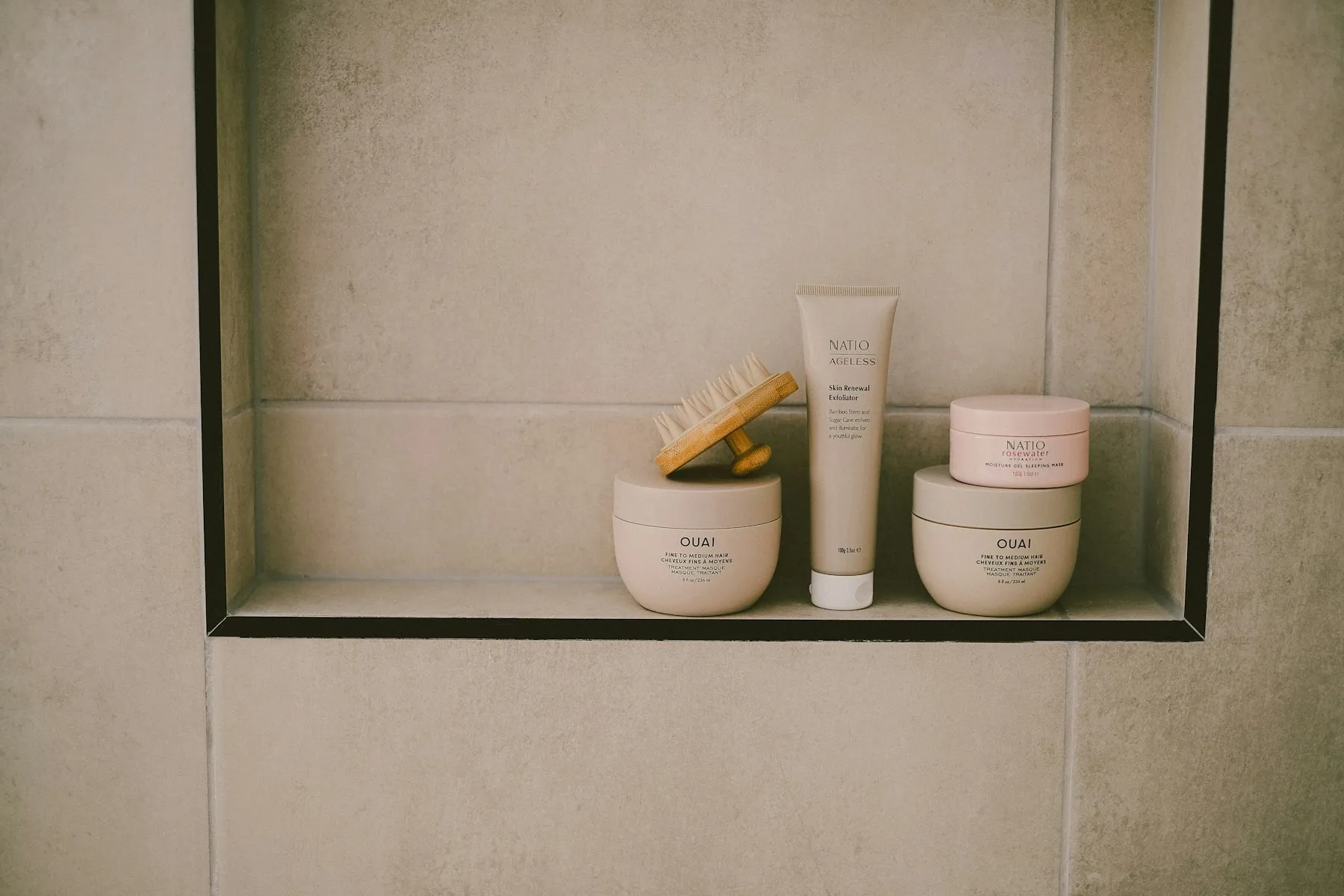
We asked five readers to photograph everything on their bathroom shelf, list what each product was for, and say how they knew it was working. Then we went through the answers.
The average shelf held nine leave-on products. The average number that had a defined job, a plausible mechanism, and any evidence of doing it was two and a half.
This is not a criticism of the readers. It is a description of what happens when a category sells solutions faster than anyone can develop problems.
The three failure patterns
Duplication. The most common by a distance. Four of five shelves carried two or more products doing the same thing under different names: a hydrating toner, a hydrating essence and a hydrating serum, all built on glycerin and hyaluronic acid at similar concentrations, applied in sequence. Layering three humectants does not triple hydration. The first one saturates what there is to saturate.
Orphans. Products bought for a problem that has since resolved, or for a season that has passed, still in rotation from habit. Two readers were using a mattifying formula bought during a summer, in February, and describing their skin as dry.
Insurance. The category nobody admits to. Something bought because it was recommended, never noticeably useful, and kept because throwing it away would confirm the money was wasted. Every shelf had at least one.
What survived the audit
Consistently, across all five: a cleanser, a moisturiser and a sunscreen. Beyond those, one active — usually a retinoid — where the reader had used it long enough to have an opinion.
That is it. Four products, three of which are unglamorous.
The interesting part is that in every case the reader’s own account of what had actually changed their skin named one of those four. Never the essence. Never the mist. Never the sixth step.
How to run the audit on your own shelf
Take everything off it. For each item, answer three questions out loud.
What is this for, in one sentence, without using the words hydrating, brightening or glow? If you cannot, it is not doing a defined job.
What would I notice if I stopped? Not what does the box say — what would you actually observe within a month. If the answer is nothing, that is your answer.
Is anything else here doing the same thing? If yes, keep the one you like using and put the other away for two months. Not in the bin, in a cupboard, because the point is to find out whether you miss it.
The uncomfortable arithmetic
A nine-step routine is not nine times as effective as a three-step one, and it is meaningfully worse in two respects: more products means more fragrance and preservative exposure, which is more chance of sensitisation, and it means more variables, which makes it impossible to tell what caused an improvement or a reaction.
The best routine is the shortest one that does the job, because it is the only one you can actually learn anything from.